
For twenty years, mixing engineers have been forced to pick a side. Go fully in-the-box and you get instant recall, flawless automation, and a session that opens exactly as you left it two years later. Go analog and you get the weight, the harmonic character, and the tactile decisiveness that a mouse has never quite replicated — but you also inherit the nightmare of matching knob positions from a photo, printing tracks one at a time, and praying nobody bumps a fader before the revision comes back.
In 2026, that trade-off is quietly disappearing. A category of recallable analog hardware — real circuits with digital control layers bolted on — has matured to the point where you no longer have to choose between the sound of iron and the convenience of software. This is the single most important shift in hybrid mixing right now, and most engineers still haven't fully caught up to what it makes possible.
What "recallable analog hardware" actually means
Let's be precise, because the term gets thrown around loosely. Recallable analog hardware is genuine analog processing — transformers, tubes, VCAs, discrete op-amps, the works — where every parameter can be stored and recalled digitally from your DAW session. The audio path stays 100% analog. Only the control of that path becomes digital.
That distinction matters enormously. You are not modeling the hardware. You are not printing a bounce you can never revise. You are running your signal through the actual box, while your DAW remembers the settings the same way it remembers a plugin preset. Recall the session, and the hardware physically re-sets itself to match.
This is the holy grail hybrid engineers have wanted since the first DAW shipped, and three products in particular have made it practical.
1. WesAudio TITAN and the ng500 standard
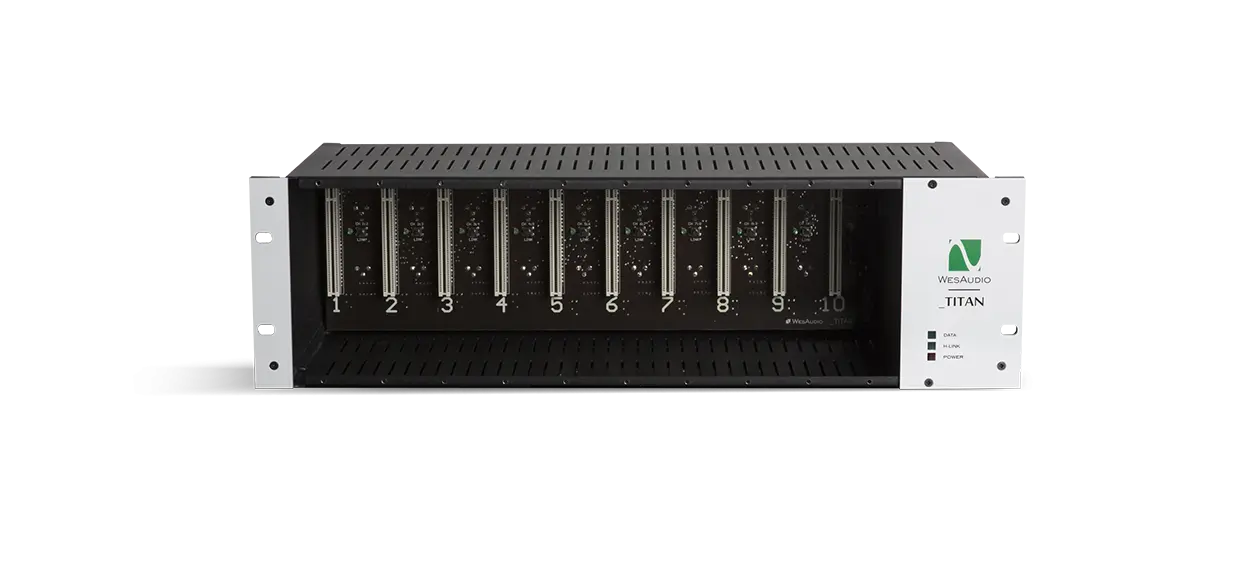
The WesAudio TITAN is a ten-slot 500-series chassis, but calling it "just a rack" badly undersells it. TITAN implements an open standard WesAudio calls ng500 ("Next Generation 500 series"), which extends the familiar 500-series connector with additional pins so that compatible modules can be controlled and recalled digitally. Using their GCon protocol, TITAN lets you manage and recall up to ten modules over a single USB or Ethernet connection — and you can even write DAW automation to move analog parameters in real time, something no traditional outboard unit allows.
The strategically important part: WesAudio has committed to making the GCon specification and software framework available to other manufacturers for free. Open standards have a way of winning. If ng500 gains traction, "recall your analog rack from your project file" stops being a boutique feature and becomes an industry expectation.
2. Flock Audio PATCH — the recallable patchbay
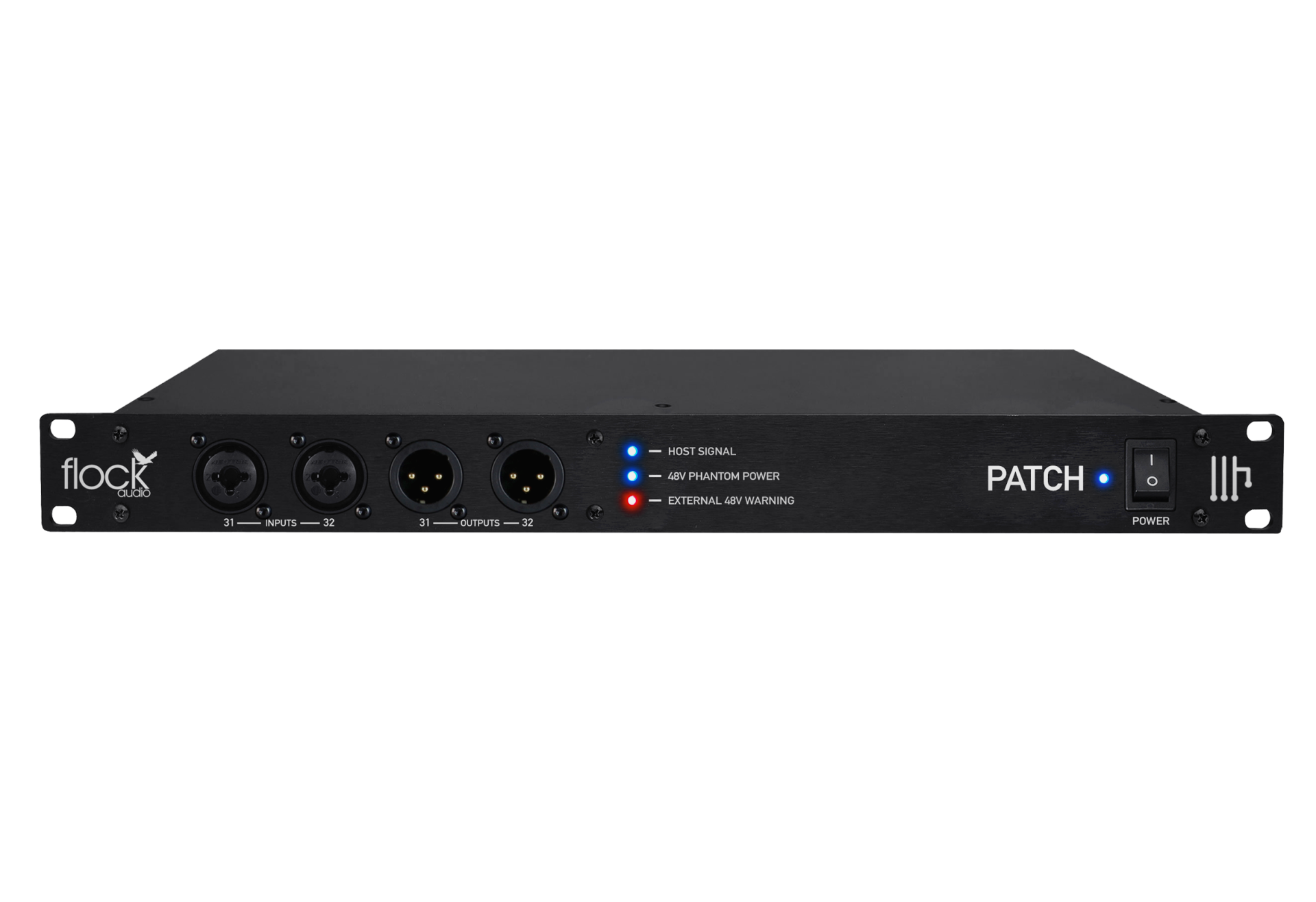
If TITAN solves recall for your processors, Flock Audio's PATCH solves it for your routing. PATCH is a digitally controlled analog patchbay: your signal flows through a clean analog matrix, but every connection is made, saved, and recalled from software. No more crawling behind the rack with a flashlight and a fistful of TT cables. Your entire hardware routing — every insert, every parallel send, every chain order — becomes part of the recallable session. For a working mix room that reconfigures its signal path per project, this is transformative.
3. Dangerous Music LIAISON — the recallable insert matrix
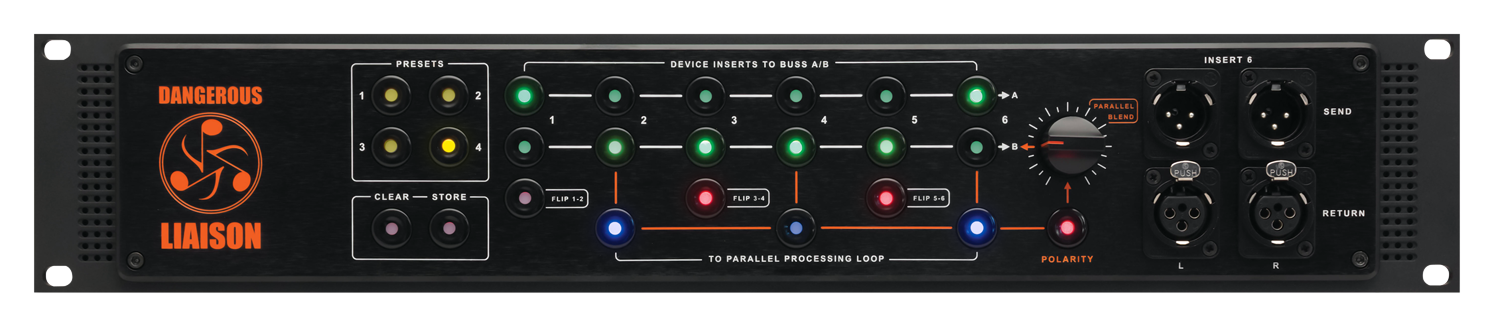
Dangerous Music's LIAISON tackles the same routing problem from the insert-chain angle. It lets you audition, reorder, and recall analog hardware inserts on the fly — swap your compressor before your EQ, blend in a parallel path, bypass a unit for A/B — all controllable and storable rather than requiring physical re-patching. Combined with recallable processors, it turns a wall of outboard into something that behaves like a modular plugin chain that happens to be made of real steel.
Put these together — TITAN for the processors, PATCH for the routing, LIAISON for the insert matrix — and you have a rig where an all-analog signal path is as recallable as an all-plugin session. Some engineers now describe being able to mix essentially "in the box, yet fully analog." That sentence would have been a contradiction five years ago.
Why this matters more than the sound alone
Here's the part that separates seasoned engineers from gear collectors: the value of recallable analog hardware isn't only tonal. It's behavioral.
Analog gear changes how you mix. There's no infinite undo and no instant A/B when you're twisting a real compressor, so every decision carries more weight. You commit. You listen harder before you move. That decisiveness is a creative advantage that all-in-the-box workflows quietly erode, because when everything is reversible, nothing feels urgent.
Recallable hardware gives you that commitment-driven mindset without the professional risk that used to come with it. You can print with conviction and still recall the session next month when the artist wants the second verse louder. You get the psychology of analog and the safety net of digital in the same signal chain. That combination — decisive tracking, recallable revisions — is why hybrid mixing has become the default professional posture in 2026 rather than a purist's indulgence.
Building a recallable hybrid rig: where to start
You don't need to buy the entire ecosystem at once. A sensible entry path:
- 1. Start with the processors you reach for on every mix — usually a bus compressor and a color EQ or channel strip. Putting these in a recallable chassis like TITAN gives you the biggest day-to-day recall payoff.
- 2. Add recallable routing once you have two or more hardware inserts — this is where PATCH or LIAISON stops being a luxury and starts saving real session time.
- 3. Pair the rig with a knob-per-function controller so your recallable analog gear and your plugins share one tactile surface. Hands on hardware, eyes on the mix, everything recallable — that's the modern hybrid ideal.
The goal isn't to go all-analog or all-digital. It's to stop treating that as a decision you have to make at all.
The bottom line
Recallable analog hardware has quietly resolved the oldest argument in mixing. You can have the harmonic weight, the tactile commitment, and the tonal character of real circuits — and still open your session two years later to find every knob exactly where you left it. The WesAudio TITAN, Flock Audio PATCH, and Dangerous Music LIAISON aren't just clever conveniences; together they represent a genuine structural shift in how professional mixes get made.
The engineers who understand this early will spend the next few years mixing faster, committing harder, and never again choosing between the sound they want and the workflow they need.
